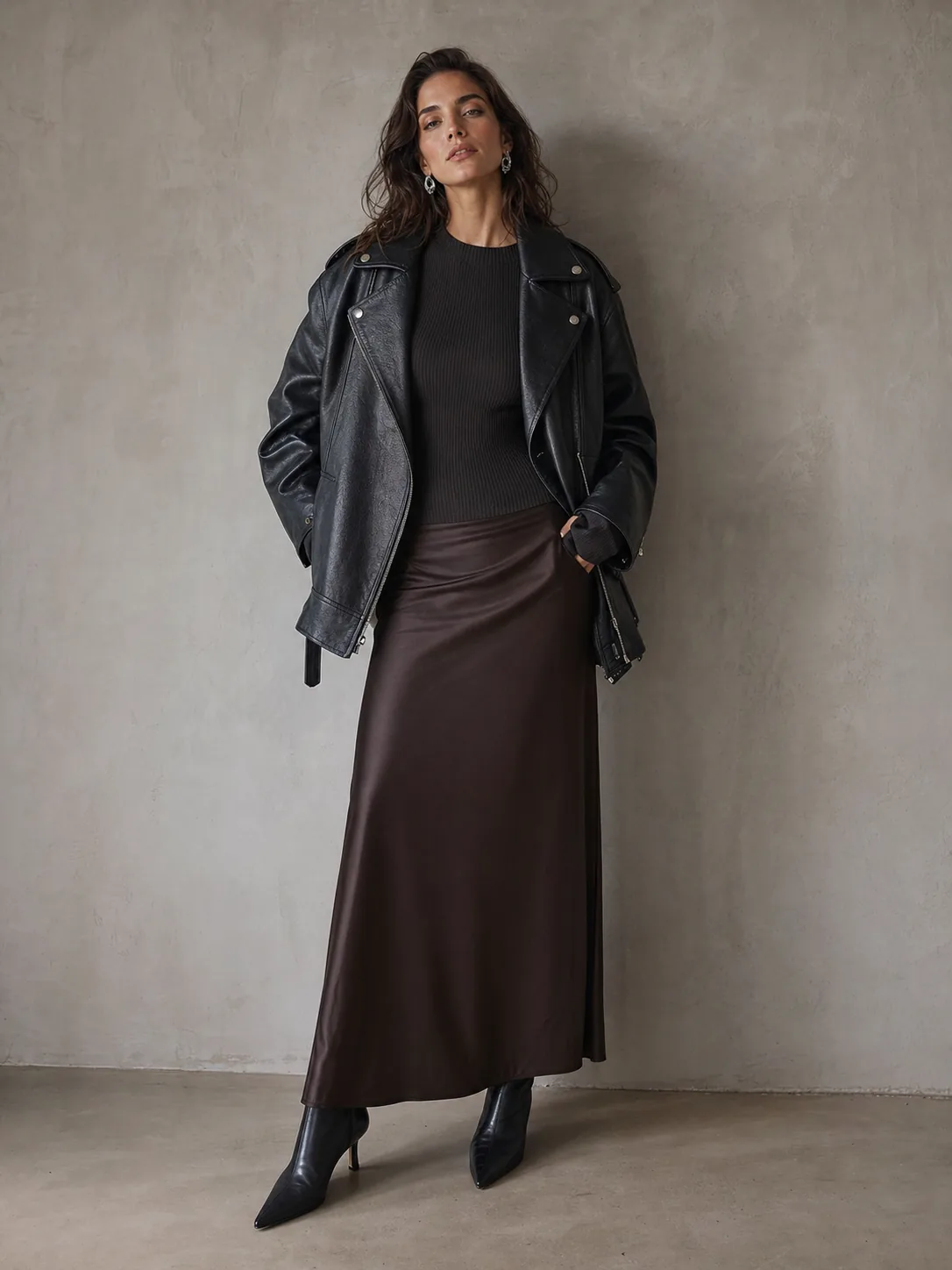
Style becomes easier to recognise when you stop asking which aesthetic you are and start collecting evidence from your own life. What do you repeat? Which proportions feel natural? What survives a full day? Which clothes express your values without requiring constant performance?
Separate style from fashion orientation
Research distinguishes different relationships with clothing, including interest in novelty and a more personal style orientation. These orientations correlate with other characteristics, but they do not determine a person's worth, wellbeing, or sustainability.
A trend can become part of personal style when it connects with existing preferences and continues to work after novelty fades. You do not need to reject trends; you need a filter for adopting them.
Collect evidence from your most-worn outfits
Choose ten outfits you genuinely wore and liked. Record silhouette, contrast, fabric, structure, exposure, footwear, and the situation. Look for repeated relationships rather than isolated hero pieces.
Then write three style words that describe observable qualities, such as structured, tactile, and calm. Avoid value judgements like flattering or age-appropriate. Use the words as a comparison tool, not a permanent identity label.
- Save full outfits, not only aspirational product images.
- Notice which details survive weather, travel, work, and laundry.
- Identify both attraction and avoidance without judging your body.
- Retest your words every season or major life change.
Experiment at low cost and low consequence
Borrow, restyle, rent, buy second-hand, or use a virtual preview before committing to an unfamiliar direction. Change one variable at a time—a trouser shape, colour, or level of structure—so you can identify what actually worked.
Qualitative research connects personal style with true, ideal, and creative aspects of self-concept. That is a useful lens, not a diagnostic test. Your style can contain contradiction and evolve with your body, work, community, and priorities.
THREE THINGS TO REMEMBER
- Use your repeated outfits as evidence instead of relying on a style quiz.
- Adopt trends through a personal filter rather than total reinvention.
- Experiment with one variable at a time and allow your style to evolve.
Questions and answers
How long does it take to find a personal style?
There is no finish line. A few weeks of outfit records can reveal patterns, while preferences continue changing with context and life.
Can I have more than one style?
Yes. Different settings require different functions, and a coherent wardrobe can still contain multiple moods or silhouettes.
Should I ignore current trends?
No. Treat them as options. Keep a trend when it works with your existing preferences, activities, and clothes.
Sources and references
- Kristian S. Nielsen, Tina Joanes, Dave Webb, Shipra Gupta, Wencke Gwozdz (2023). Exploring the psychological characteristics of style and fashion clothing orientations. Journal of Consumer Marketing. DOI: 10.1108/JCM-04-2022-5344
Limitation: This four-country study is correlational and cannot show that a style orientation causes wellbeing, sustainability, or any particular behaviour.
- Justina Vingilyte, Ameerah Khadaroo (2025). Personal clothing style and self-concept: Embracing the true, the ideal and the creative self. Fashion, Style & Popular Culture. DOI: 10.1386/fspc_00130_1
Limitation: A small qualitative study of seven women offers depth about self-concept but cannot support statistical generalisation.