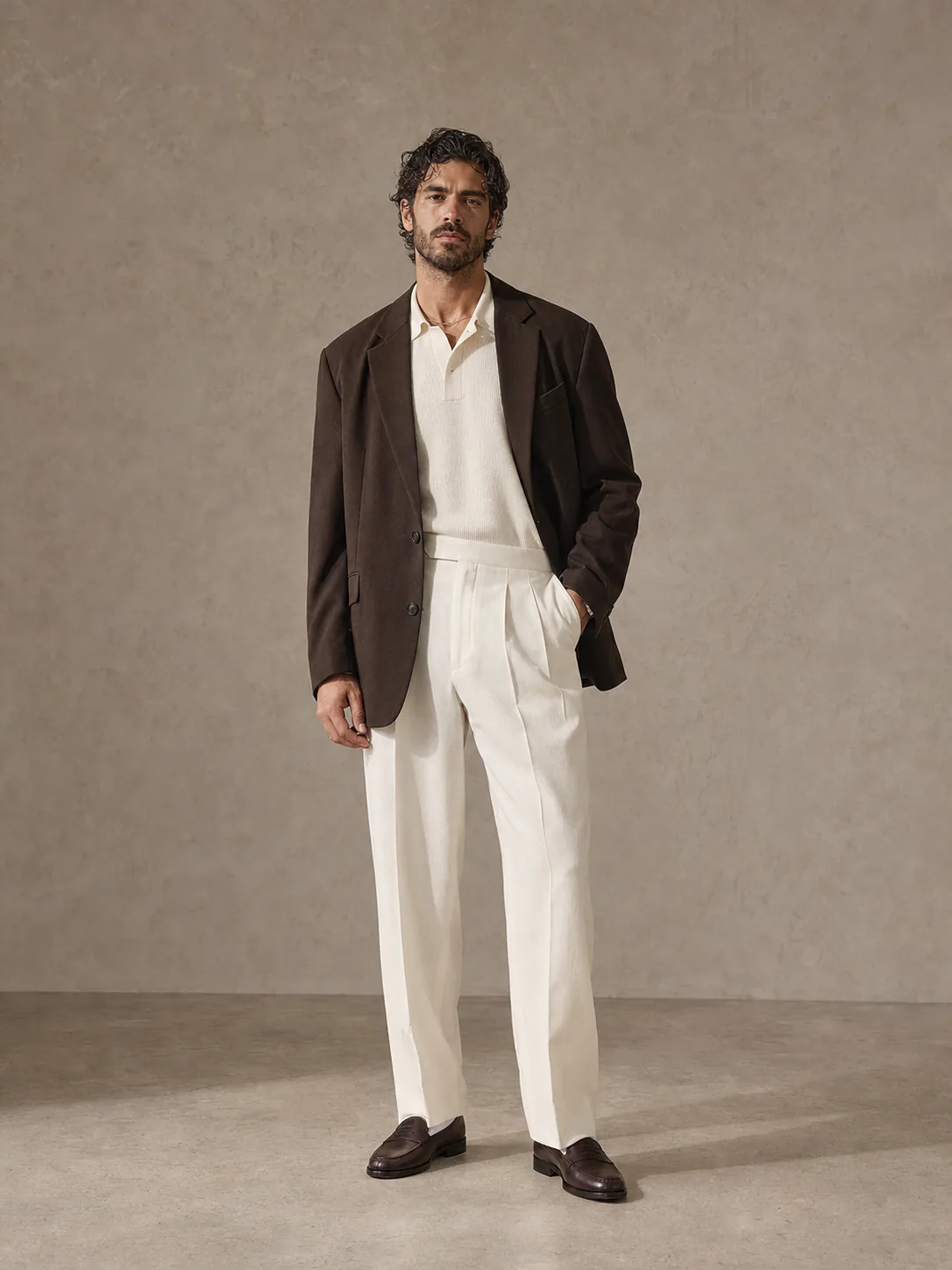
A full wardrobe can still feel unusable when the decision lacks constraints. Research on choice overload does not say that many options always cause paralysis. The effect depends on complexity, preferences, time pressure, and whether alternatives can be compared on meaningful attributes.
What choice-overload research actually says
A 2010 meta-analysis found an average effect near zero alongside large variation between studies. A later review identified moderators that make overload more or less likely. The responsible conclusion is conditional: choice can become difficult under certain circumstances, not simply because the number is high.
A wardrobe often creates those difficult circumstances. Items differ across temperature, formality, comfort, laundry status, colour, and required care. Without a goal, the comparison becomes noisy.
Choose constraints in the right order
Begin with non-negotiables: weather, activity, safety, dress requirements, sensory comfort, and clean availability. Then select one anchor piece. Complete the outfit around that anchor instead of comparing every possible combination simultaneously.
Save reliable formulas in a phone album. A photo turns an outfit into a retrievable option and reduces repeated work. Rotate a small visible rail for the week if seeing the entire wardrobe creates friction.
- Constraint 1: weather and physical activity.
- Constraint 2: formality, safety, and accessibility.
- Constraint 3: one anchor item.
- Constraint 4: colour, texture, and preferred finishing detail.
Create defaults without creating a uniform
A default formula is a decision shortcut, not a ban on creativity. Keep two or three formulas for recurring situations and vary one component. This preserves choice while making the starting point obvious.
If wardrobe decisions cause sustained distress connected to body image, compulsive behaviour, or anxiety, an outfit system is not treatment. Consider appropriate support rather than framing the problem as a failure of organisation.
THREE THINGS TO REMEMBER
- More choice is not always worse; difficulty depends on context and comparability.
- Filter by real constraints before considering style details.
- Use saved formulas as defaults, then vary one element.
Questions and answers
Does a large wardrobe cause decision paralysis?
Not necessarily. It is more likely to feel difficult when items are hard to compare, preferences are unclear, or time pressure is high.
What is the fastest way to choose an outfit?
Filter for weather and activity, choose one anchor item, then use a saved formula for the remaining pieces.
Will a capsule wardrobe solve choice overload?
It can reduce complexity if its pieces fit your real activities. An arbitrary small wardrobe can create different problems if it ignores your needs.
Sources and references
- Benjamin Scheibehenne, Rainer Greifeneder, Peter M. Todd (2010). Can There Ever Be Too Many Options? A Meta-Analytic Review of Choice Overload. Journal of Consumer Research. DOI: 10.1086/651235
Limitation: The mean effect was close to zero while results varied substantially across conditions, so more choice is not automatically harmful.
- Alexander Chernev, Ulf Böckenholt, Joseph Goodman (2015). Choice overload: A conceptual review and meta-analysis. Journal of Consumer Psychology. DOI: 10.1016/j.jcps.2014.08.002
Limitation: The meta-analysis identifies important moderators. Applying them to a personal wardrobe is a practical extrapolation, not a directly tested intervention.