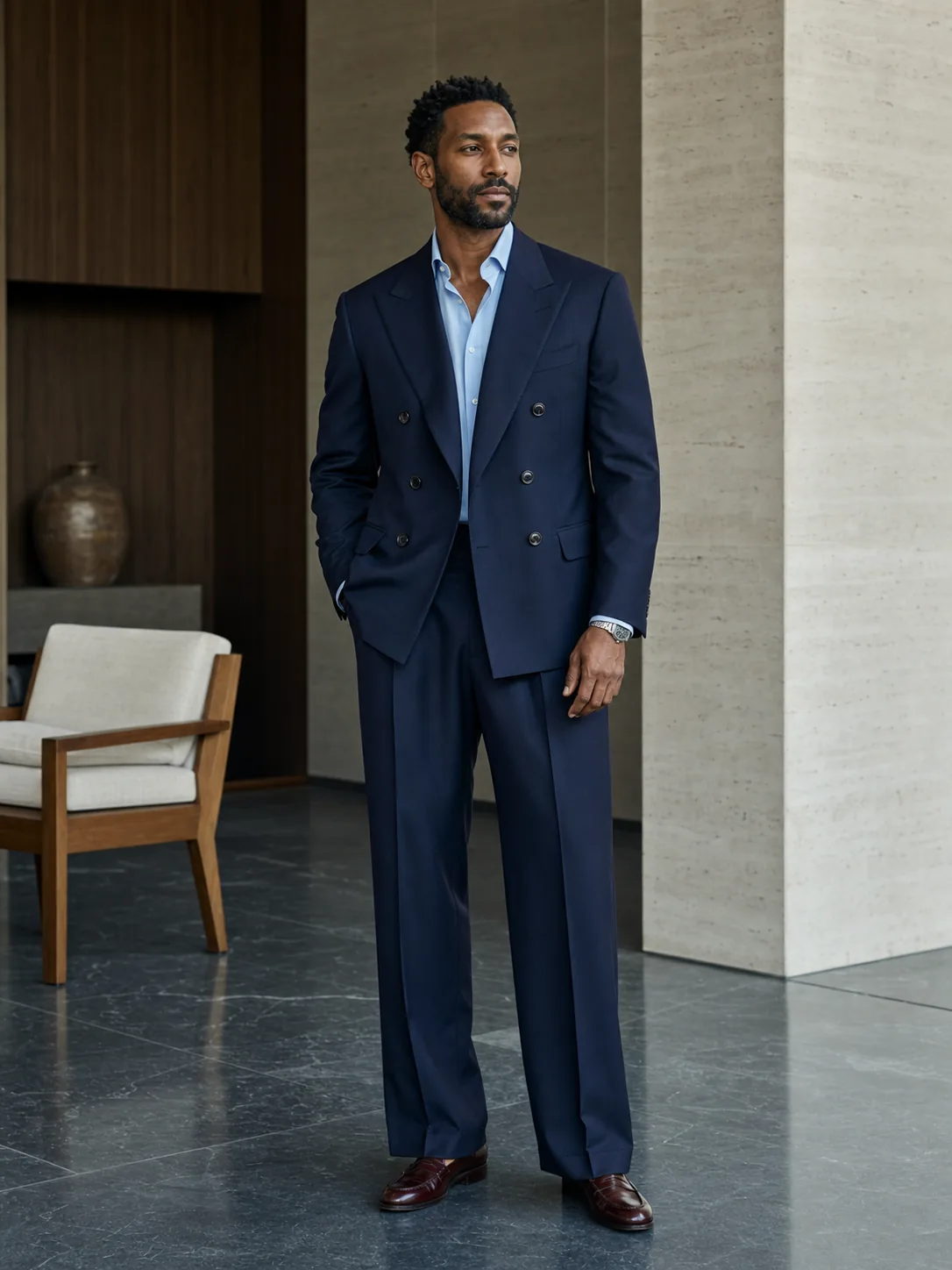
Your clothes are visible before your portfolio is discussed, but their role is limited. A strong interview outfit is clean, physically comfortable, appropriate to the role, and familiar enough that you stop thinking about it once the conversation begins.
Research the setting, not a fantasy employee
Review the organisation's public photos and the practical demands of the role. A bank, laboratory, studio, shop floor, and remote-first software team may all signal professionalism differently. If expectations remain unclear, asking the recruiter is a reasonable accessibility and preparation question.
Choose an outfit one step more structured than your everyday version when uncertainty is high, but do not mimic a uniform that feels foreign. Familiar shoes and a tested layer are safer than an untried transformation.
Fit should free your attention
Sit, walk, reach, and raise your arms in the full outfit. Check that buttons stay closed, waistbands do not require monitoring, and the temperature is manageable. For video, test contrast against the background and inspect how the neckline appears in the actual frame.
Research on small changes to formal attire suggests that fit can alter some first impressions. The study does not justify one ideal body or silhouette. The goal is simply clothing that behaves predictably during the task.
Remember that appearance bias belongs to the observer
Status cues can influence perceived competence even when the face is unchanged. This is evidence of bias, not a reason to buy conspicuous luxury. Employers should use structured questions and job-relevant evidence instead of intuition about polish.
Your best preparation remains role knowledge, examples, questions, rest, and a reliable setup. Clothing should remove friction rather than carry the burden of proving your value.
- Prepare the complete outfit at least one day before.
- Bring or plan one practical layer for temperature changes.
- For video, test camera height, sound, lighting, and background together with the clothes.
THREE THINGS TO REMEMBER
- Match the real work context, not a generic corporate stereotype.
- Test movement and video framing before the interview.
- Clothing cannot demonstrate competence; your evidence and conversation must do that.
Questions and answers
Must I wear a suit to an interview?
No. A suit is appropriate in some settings, while clean knitwear, a structured overshirt, or other polished clothing may fit others better.
What should I wear for a video interview?
Choose a comfortable top with clear contrast from the background, avoid distracting small patterns, and test the real camera frame and lighting.
Can I ask about the dress code?
Yes. A concise question to the recruiter can prevent guesswork and is especially useful when clothing relates to safety, disability, religion, or sensory needs.
Sources and references
- DongWon Oh, Eldar Shafir, Alexander Todorov (2020). Economic status cues from clothes affect perceived competence from faces. Nature Human Behaviour. DOI: 10.1038/s41562-019-0782-4
Limitation: Nine experiments measured observers' biased competence judgements, not the photographed people's actual ability or performance.
- Neil Howlett, Karen Pine, Ismail Orakcioglu, Ben Fletcher (2013). The influence of clothing on first impressions: Rapid and positive responses to minor changes in male attire. Journal of Fashion Marketing and Management. DOI: 10.1108/13612021311305128
Limitation: The study used one male model and two versions of formal attire, so its findings should not be treated as a universal dress code.